
Solutions | Government
Sovereign Intelligence from Space: Protecting Citizens, Securing Nations
Sensing delivers satellite intelligence using proprietary and satellite partner data — enabling civil authorities to monitor air quality, urban resilience, and environmental threats, while empowering defense partners with early warning, CBRN detection, and tactical situational awareness.
technology edge
Our Technology Edge:
Dual-Use by Design
GESat Data: See the Invisible Spectrum
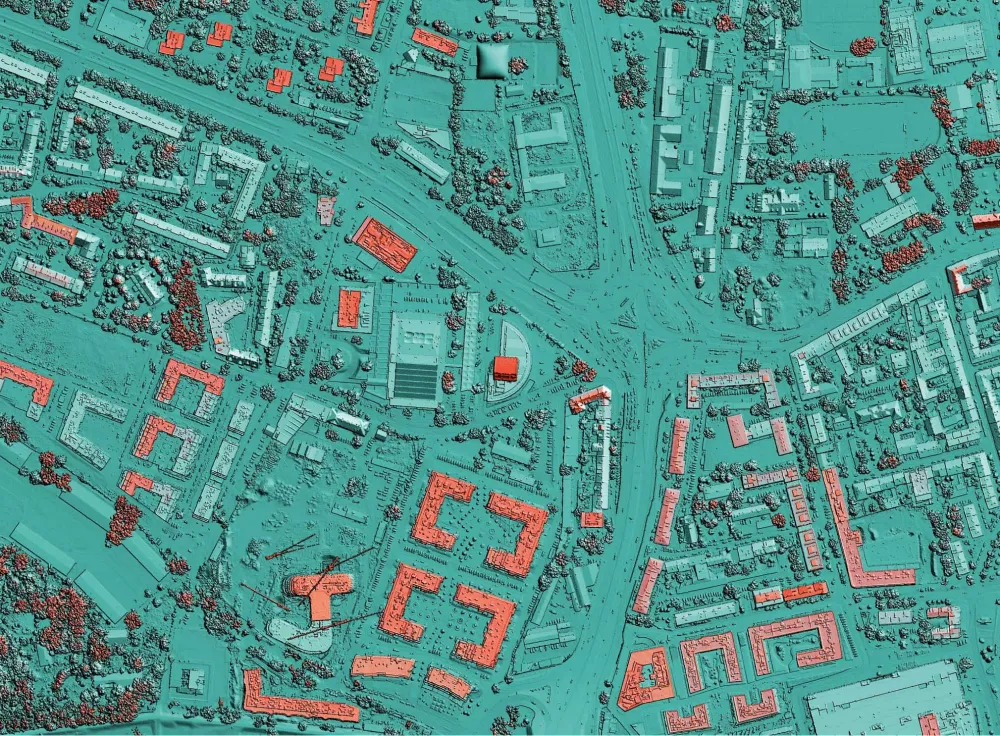
Civil environmental solutions
- Atmospheric gas mapping: Quantify methane (CH4), ammonia (NH₃), sulfur dioxide (SO₂), nitrogen oxides (NOₓ), and volatile organic compounds (VOCs) at 30m resolution for regulatory enforcement and public health modeling
- Material identification: Detect spectral fingerprints of paints, fabrics, soils, and chemicals—enabling the identification of counterfeit installations and the tracking of hazardous materials
- Environmental forensics: Trace pollution to specific industrial sources, agricultural operations, or illegal dumping sites with defensible attribution
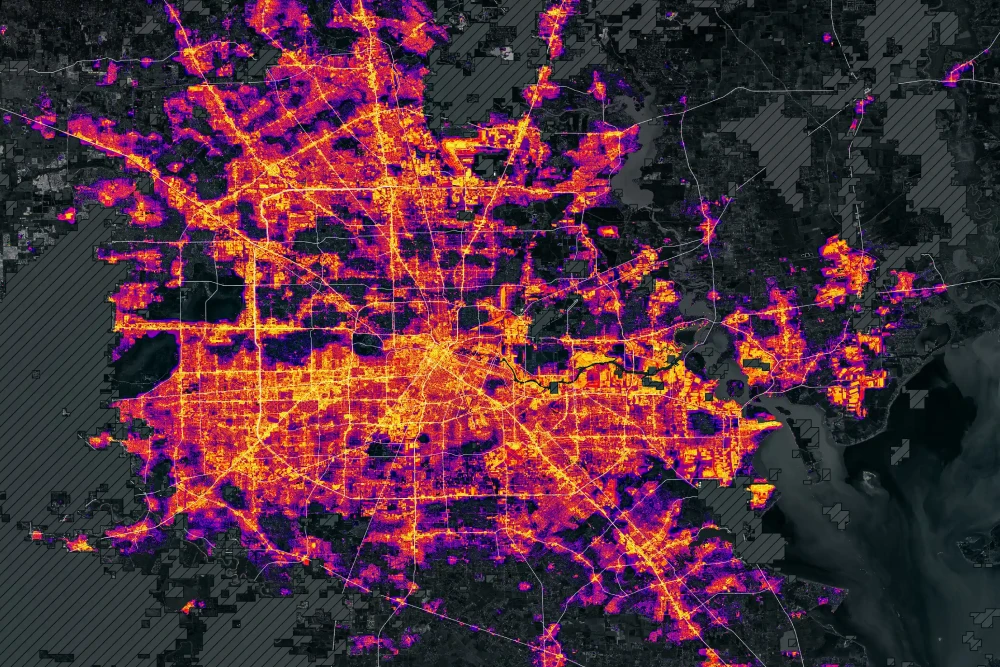
Dual environmental solutions
- Advanced warning: identify high-temperature exhaust signatures from conventional weapon launches with rapid alerting to command centers
- CBRN threats: Detection of airborne or surface deployments of gas and other unconventional weapons.
- Camouflage & concealment detection: Detection of material composition anomalies invisible to optical or NIR sensors — exposing disguised assets, fake vegetation or artificial cover.
Secure multi-source data fusion solutions
We integrate proprietary sensor data with authorized sources to deliver mission-ready intelligence:
GESat hyperspectral & thermal infrared
Gas detection, material ID, environmental monitoring, early warning, thermal anomaly alerting, urban heat mapping.
Satellite Partner Optical & Synthetic Aperture Radar
Change detection, infrastructure monitoring, terrain analysis, near-real time events monitoring.
Authorized data feeds
Weather models, open-source intelligence (OSINT), classified partner data via secure API.
Client-provided data
Ground sensor networks, field reports, intelligence summaries.
intelligence pipeline
AI-Powered Intelligence Pipeline
Our processing chain is designed for government requirements:
Automated alerting
Rule-based and machine learning-driven notifications for threshold breaches (e.g., ammonia spike, thermal anomaly, spectral match)
Fusion analytics
Correlate satellite observations with ground intelligence to reduce false positives and improve attribution confidence
Secure delivery
API, STANAG-compliant feeds, or air-gapped data packages per mission requirements.
our solutions
Governmental use cases
Civil Applications and Environmental Safety
Protect public health, enforce regulations, build climate resilience
- Air quality enforcement: Pinpoint ammonia emissions from agriculture, industrial leaks, or cross-border pollution for targeted inspections and policy action
- Disaster response support: Rapid damage assessment, hurricane impact, and fire spread forecasting using multi-sensor fusion
- Critical infrastructure monitoring: Detect thermal stress on power grids, water systems, or transport networks during extreme events
Outcome:
Evidence-based policy, faster emergency response, reduced public health burden
Defense & Strategic Intelligence
Enhance situational awareness, deter aggression, protect forces
- Advanced alert: complement to ground sensors by hyperspectral detection for better coverage and reduced reaction time.
- CBRN reconnaissance: Remote identification of chemical/biological threat preparations without forward deployment
- Camouflage & deception detection: Reveal concealed assets, fake installations, or terrain modification using hyperspectral material analysis
Outcome:
Improved decision advantage, force protection, strategic deterrence
How It Works
From Orbit to Operational Decision
Diagnostic
Meet with one of our experts, explain your needs, and we will formulate a solution.
No upfront paymentExecution
Whether on a fixed-price basis or with on-site technical assistance, a dedicated Sensing Architect works on your use case, leveraging our proprietary and partner data streams processed in sovereign EU facilities.
EU sovereign processingDelivery
Tailored to meet your needs, from the delivery of customized reports to the integration of APIs directly into your decision-making systems.
API · Encrypted · Air-gappedTrusted By








From its inception, SENSING Atmospheric Intelligence has had a clear vision of its ambitions, aligned with the national and European economic and scientific landscape.
Responding to an urgent need for space-based monitoring of one of the most potent greenhouse gases, the company has quickly assembled a team of experts and built a highly effective network, as evidenced by the launch of its first satellite in early 2025 and numerous associated service contracts. CNES has observed the high quality of the services provided by the company to date.
As the coordinator of the national space program focused on atmospheric composition, I have witnessed the enthusiasm with which SENSING Atmospheric Intelligence has considered CNES’s recommendations and guidance to further their development, always through transparent and constructive dialogue.
— Carole DENIEL
Head of Space Programs Related to Atmospheric Composition within the Innovation and Applications Directorate – CNES.
resources