
During the event, Nicolas Fabre, Managing Director of Sensing, presented our latest work on the operational integration of high-resolution methane monitoring into European statistical and regulatory frameworks.
From Demonstrator to Operational Service : Integration of High-Resolution Methane EO into European Regulatory Workflows
The presentation explored how high-resolution methane observations from space can evolve from successful demonstration projects into trusted operational services supporting European policy, reporting, and environmental monitoring needs.
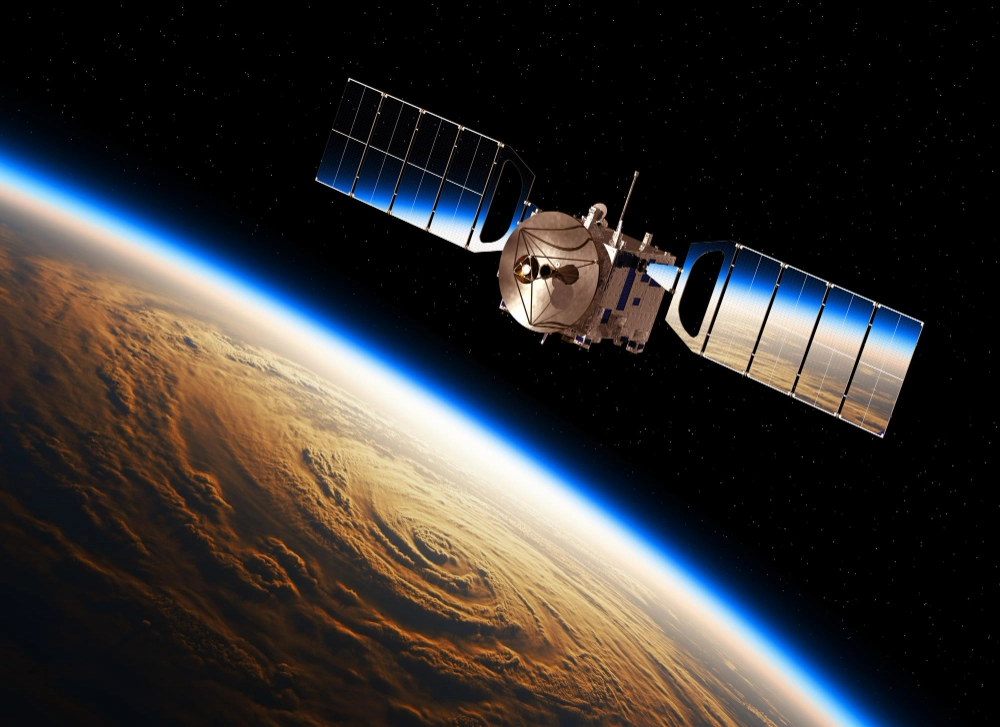
Operated by Sensing and recognized as an emerging Copernicus Contributing Mission, GESat GEN1 delivers methane observations at tens-of-metres resolution, enabling the detection and quantification of methane emission hotspots with unprecedented precision. Building on successful demonstrations conducted with the European Space Agency (ESA) and the Copernicus Rapid Response Desk, the focus is now shifting toward long-term operational deployment and institutional adoption.
The presentation outlined a roadmap for integrating satellite-derived methane intelligence into the workflows of National Statistical Institutes (NSIs), regulators, and environmental authorities. Key themes included:
- The transition from a single satellite to a future constellation, improving revisit frequency and enabling near-real-time detection of large methane emission events.
- A scalable processing chain combining physics-based inversion methods with AI-assisted source attribution, scene classification, and anomaly detection.
- The development of digital-twin approaches for facility-level methane accounting and monitoring.
- The operational requirements necessary for institutional adoption, including standardized products, harmonized metadata, uncertainty quantification, quality indicators, and service-level commitments.
- Long-term sustainability through integration with the Copernicus Data Space Ecosystem and the Copernicus Contributing Missions framework.
As governments and institutions seek reliable, actionable data to support climate policies and methane reduction commitments, high-resolution Earth observation is becoming an essential component of environmental intelligence. The transition from pilot projects to operational services is a critical step toward making methane monitoring a permanent and policy-relevant element of Europe’s statistical infrastructure.
The GEO Symposium provided an excellent opportunity to engage with partners, institutions, and innovators working at the intersection of Earth observation, artificial intelligence, and climate action. We would like to thank the organizers and participants for the insightful discussions and valuable exchanges throughout the week.
We look forward to building on these conversations and strengthening collaborations that will help accelerate the adoption of operational methane intelligence worldwide.